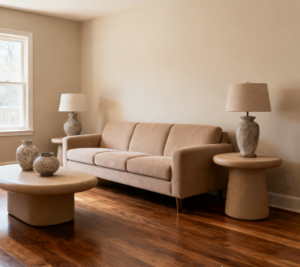
Flooring plays a major role in fall prevention and mobility ease at home. Here’s how the most common flooring types compare for senior safety.
Key Factors to Consider
- Slip resistance: Especially important in kitchens, bathrooms, and entryways.
- Cushioning: Softer flooring can reduce injury severity in the event of a fall.
- Ease of mobility device use: Smooth, even surfaces are easier for wheelchairs and walkers to navigate than thick carpet or uneven tile.
- Glare: Highly glossy floors can create visual confusion for seniors with vision changes.
Flooring Options Compared
Vinyl and Luxury Vinyl Plank (LVP)
Generally slip-resistant, water-resistant, and easy for wheelchairs and walkers to roll across smoothly — a popular choice for aging-in-place homes.
Cork Flooring
Offers natural cushioning, which can help reduce injury severity from falls, along with reasonable slip resistance.
Low-Pile Carpet
Provides cushioning and warmth, but should be low-pile to avoid catching walker or wheelchair wheels, and secured firmly to prevent bunching.
Tile
Durable and easy to clean, but can be hard and slippery when wet unless textured, slip-resistant tile is used — an important consideration for bathrooms.
Hardwood
Attractive and easy to roll across, but can become slippery, especially with certain finishes or when wet.
Recommendations by Room
- Bathroom: Textured, slip-resistant tile or vinyl.
- Kitchen: Slip-resistant vinyl or cork.
- Living areas: Low-pile carpet or vinyl plank.
- Bedroom: Low-pile carpet for warmth and cushioning.
Frequently Asked Questions
Is carpet bad for seniors?
Not necessarily — low-pile, securely installed carpet can offer cushioning benefits, but thick or loose carpet can increase trip risk.
What flooring is best for wheelchair users specifically?
Smooth, hard flooring like vinyl plank or tile is generally easiest for wheelchair maneuverability.
How can I make existing flooring safer without replacing it?
Adding non-slip treatments, securing loose rugs, and improving lighting can improve safety without a full flooring replacement.