The bathroom is one of the most common locations for falls among older adults, due to wet surfaces, tight spaces, and the physical demands of sitting, standing, and stepping over tub edges. Here’s how to reduce that risk.
1. Improve Flooring Safety
Install non-slip mats both inside and outside the tub or shower, and consider slip-resistant flooring options for a longer-term solution.
2. Install Grab Bars Strategically
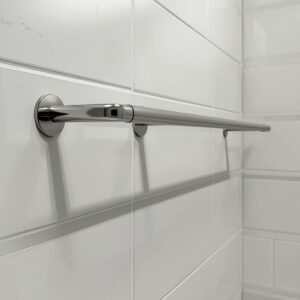
Place grab bars near the toilet, inside the shower or tub, and along key walking paths. See our Best Grab Bars for Elderly Bathrooms guide for detailed placement advice.
3. Improve Lighting
Bright, even lighting reduces the risk of missteps, especially for seniors with reduced vision. Consider motion-activated night lights for nighttime bathroom trips.
4. Consider a Walk-in Tub or Shower
Eliminating the need to step over a high tub wall significantly reduces fall risk. See our comparison of walk-in showers vs walk-in tubs.
5. Use a Shower Chair or Bench
Sitting while showering reduces balance-related fall risk, especially for those with limited stamina or lower body strength.
6. Raise the Toilet Seat
A raised toilet seat reduces the physical strain of sitting down and standing up, lowering fall risk during transfers.
7. Keep the Path Clear
Remove bath mats that could bunch up, cords, or any clutter along walking paths to and from the bathroom.
Frequently Asked Questions
What’s the single most effective bathroom safety upgrade?
Properly installed grab bars combined with non-slip flooring are generally considered the most cost-effective, high-impact safety upgrades.
Are bath mats enough to prevent falls?
Non-slip mats help but should be combined with grab bars and good lighting for comprehensive fall prevention.
Should someone with a fall history use a shower chair?
Yes, shower chairs are commonly recommended by occupational therapists for individuals with a history of falls or balance issues.